

Additive Manufacturing in Military and Defence Industry Applications
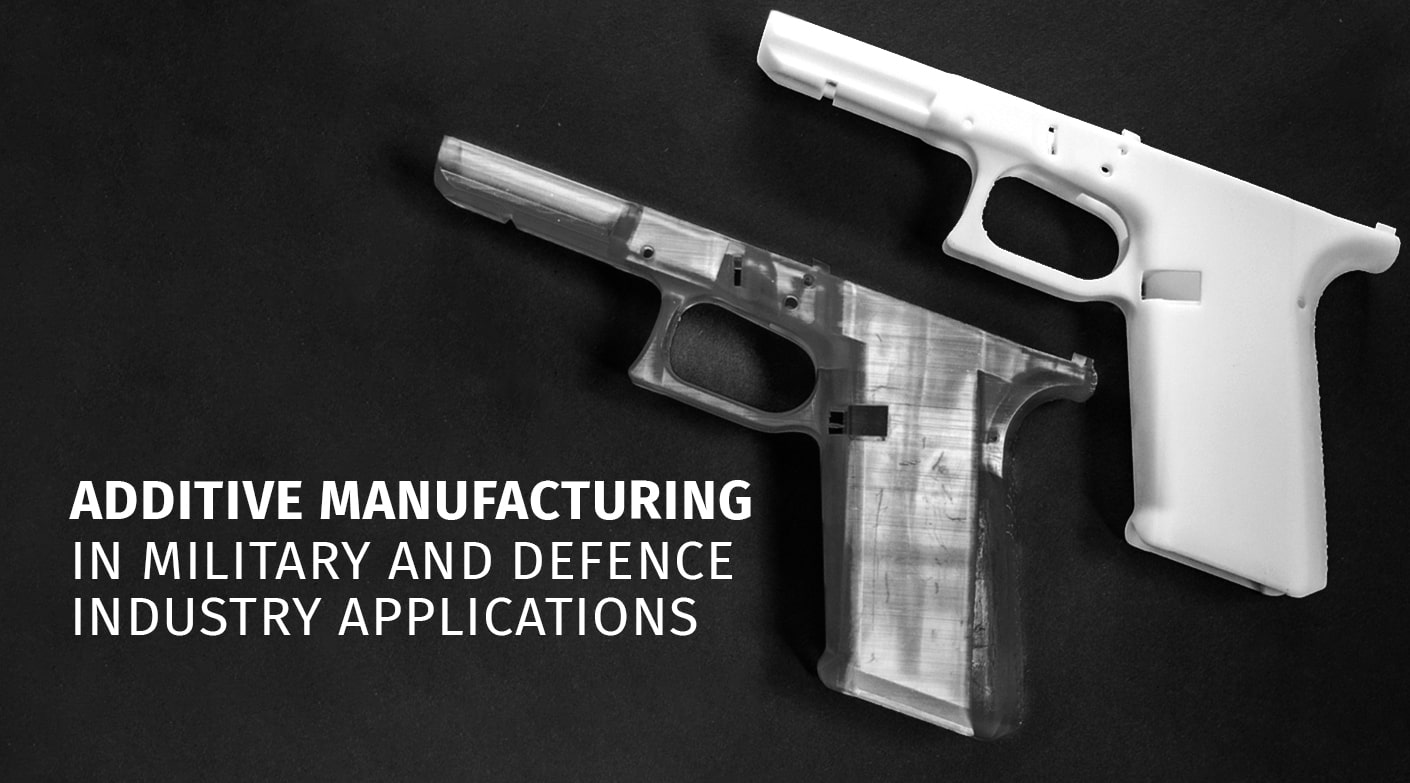
Global defence is changing, and that change is happening rapidly. With increasing levels of geopolitical tension and the rise in complexity of military operations, defence organisations are striving to enhance their preparedness, save on expenditure, and innovate faster than ever before. The use of additive manufacturing within military and defence settings has become a game-changer, changing the design, production, deployment, and repair of equipment.
Although previously limited to prototyping, 3D printing is now utilised in the military in areas such as mission-critical parts, the ability to repair parts in the battlefield, unmanned systems, hypersonics, and even secure digital warehousing. Simultaneous technological progress in materials science and automation has driven additive manufacturing applications in the defence industry into a multi-billion-dollar innovation sector, one that is becoming irreplaceable.
Let’s see how additive manufacturing is transforming military and defence industry applications.
Why Defence Forces are Investing Big in Additive Manufacturing
Conventional manufacturing systems follow traditional supply chains that are long and inflexible. Additive manufacturing in a military context, on the other hand, enables military units to create parts as required, significantly reducing lead times. Basically, it is an investment for strategic speed for production and deployment.
It could be a new part that replaces an aeroplane, a highly operational drone, or bespoke armour fittings. Defence engineers can 3D print anything they require, at any place, and sometimes in just a few hours. Immediate responsiveness is invaluable in combat operations or humanitarian missions, where even the slightest delay can compromise the mission’s success.
6 Key Industry Applications of Additive Manufacturing in Military and Defence
The contemporary defence organisations are not just experimenting; they are scaling. A 2025 market forecast revealed that the military 3D printing market is valued at USD 3.10 billion in 2024. This shows that investing in additive manufacturing is a strategic move by the organisations. The most effective areas of adoption are as follows:
#1 Rapid Battlefield Repairs in the Military with Additive Manufacturing
The fact that replacement parts can be printed on the battlefield is one of the most disruptive advantages. Mobile 3D printing units enable the soldiers to repair their broken vehicles, drones, or communication systems without having to wait until the logistics reach the supply chain.
This enhances maintenance downtime, continuity of operations, and mission resiliency even in remote or hostile environments.
#2 Additive Manufacturing in the Modernisation of Military Equipment
Each legacy platform, like tanks, fighter jets, and naval ships, is often dependent on parts that are no longer manufactured.
By utilising 3D printing military technologies, engineers will be able to print discontinued components based on digital representations, thereby prolonging the life cycle of billion-dollar assets and reducing the overall ownership costs.
It is even being deployed in some armies to facilitate reverse engineering to replicate complex geometries that cannot be economically created using conventional machining.
#3 Additive Manufacturing in Military for Personalised Soldier Gear
Additive manufacturing enables scale-based customisation. Militaries can customise their gear to suit the individual needs of individual soldiers, be it ergonomically optimised helmets, lighter armour plates, or even individually sized equipment mounts.
Result? More comfort, mobility, and fighting capability.
#4 3D Printing for Aircraft Components
Some of the most stringent engineering conditions are set in aerospace, and already, 3D printing in aerospace and defence has passed the test.
Benefits include:
- Weight reduction in the form of light structures to increase fuel efficiency.
- Heat-resistant engine materials.
- Complicated geometries for guided missiles.
- Fewer parts to increase reliability.
Aircraft with 3D-printed metal and polymer components, such as air ducts, brackets, and structural parts, are used for more efficiency.
#5 Additive Manufacturing for Hypersonic Innovation
Hypersonics demand materials that can withstand extremely high temperatures and aerodynamic forces.
With additive manufacturing, complex cooling channels and lattice patterns can be fabricated, which are not possible in casting or machining.
This has greatly accelerated the prototyping process and has enabled defence organisations to test new hypersonic designs faster than ever before.
#6 Digital Warehousing and Secure Supply Chains
Rather than keeping thousands of physical spares, defence forces are constructing digital inventories.
3D models are stored in secure and encrypted databases, which can be printed anywhere in the world when necessary. This does not just remove the cost of storage but also reduces the vulnerability of the supply chain.
Additive Manufacturing Defence Industry: Key Benefits
#1 Unmatched Design Freedom
Additive manufacturing offers the defence industry far-reaching advantages beyond cost savings, beginning with unparalleled design flexibility that frees engineers from the limitations of traditional machining constraints.
This freedom allows topology-optimised structures, complex internal channels, lightweight lattice geometries, and even multi-material components, all of which significantly enhance performance in aircraft, missiles, UAVs, and combat vehicles.
#2 Resource Efficiency
3D printing can significantly reduce the amount of waste material consumed, reduce carbon emissions through fewer logistical steps, and enable damaged metal components to be repaired instead of replaced.
This is becoming an increasingly important objective among modern militaries wishing to operate more sustainably.
#3 Increased Resilience of Supply Chain
The third advantage is increased supply chain independence, which is now a priority in the time of global disruptions, sanctions, and lengthy procurement times. Additive manufacturing enables the defence forces to localise production of key part components, 3D-print parts on demand, and decrease dependence on external suppliers.
The benefit was well demonstrated in a 2024 case when the U.S. Navy pointed out that 3D-printed parts might compromise the readiness of submarines unless the industry scales up production of these parts promptly.
(Source)
According to the claims by the naval chiefs, persistent delays and backward supply chains are hindering submarine maintenance programs, with additive manufacturing no longer a luxury but a necessity to maintain operational independence and avoid fleet backlog.
As the Navy emphasised, in the absence of industrial involvement, the risks to national security would increase due to the lack of mission-driven undersea components, and this shows the importance of supply chain autonomy.
#4 Accelerated R&D and Faster Iterations
The fourth advantage is that it has quicker R&D and expedited iterations and prototyping times, which used to take months can now be done in days.
This pace enables defence innovators to test a variety of things quickly, discover flaws in their designs early, and drive progress in drones, hypersonics, autonomous vehicles, and satellite structures.
#5 Performance Reliability
The fifth advantage is the enhanced mission preparedness and dependability in performance.
Additive manufacturing enables the creation of customised parts specific to the environment in which the system operates, facilitates quick field repair, and makes ageing platforms mission-ready even without access to the original manufacturer.
Conclusion
Military additive manufacturing is no longer experimental technology, but rather a core technology. Its influence is transforming the speed and accuracy of the latest defence operations, whether it is battlefield repairs to aerospace inventions, digital warehousing, or rapid prototyping.
With defence forces all over the world moving towards digital manufacturing bases, partners such as Cubein are important as they facilitate secure interaction, efficient workflow, and scalable innovation infrastructure. At Cubein, we believe that the future of defence does not just lie in the advanced 3D printers but also in intelligent platforms that will streamline additive manufacturing and make it secure and strategically powerful.
| Transform your aerospace and defence projects with additive manufacturing. |
FAQs
1. What is the role of additive manufacturing in the military in changing defence production?
It enables the quick on-demand production of components for critical missions, thereby decreasing the reliance on extensive supply chains. Defence teams receive faster, more flexible, and enhanced mission preparedness.
2. Why is 3D printing military equipment a good idea?
3D printing aids in making lighter and stronger components with complex geometries that cannot be achieved through conventional machining. It also minimises cost, waste in materials, and time wastage in the operations.
3. Why does 3D printing make aerospace and defence game-changing?
It enables aerospace engineers to develop high-performance elements with optimised structures, which will make aircraft effective, minimise their weights, and shorten R&D processes.
4. What roles do the additive manufacturing defence industry play in preserving data security?
Encrypted design files ensure the protection of Sensitive IP, a secure cloud platform, and traceability systems. These will deter hacking and protect the complete digital production cycle.
Other Blog
Post-processing for SLS 3D Printed and MJF Parts
Post-processing for SLS 3D Printed and MJF Parts
Read More
Selective Laser Sintering 3D Printing vs. Other 3D Meth...
Selective Laser Sintering 3D Printing vs. Other 3D Methods
Read More
High Quality, Reliable, Quick 3D Printing Services in B...
High Quality, Reliable, Quick 3D Printing Services in Bangalore
Read More
Benefits of SLS 3D Printing for Functional Prototyping
Benefits of SLS 3D Printing for Functional Prototyping
Read More
Original Design Manufacturers in India for Automotive I...
Original Design Manufacturers in India for Automotive Innovation
Read More
Common Product Design Mistakes and How to Avoid Them
Common Product Design Mistakes and How to Avoid Them
Read More
Vacuum Casting Services vs. Injection Molding: Which is...
Vacuum Casting Services vs. Injection Molding: Which is Right for Your Business?
Read More
What Should I Know Before Getting An Injection Molding ...
What Should I Know Before Getting An Injection Molding Quote?
Read More