


Top Injection Molding Trends to Watch in 2026 and Beyond
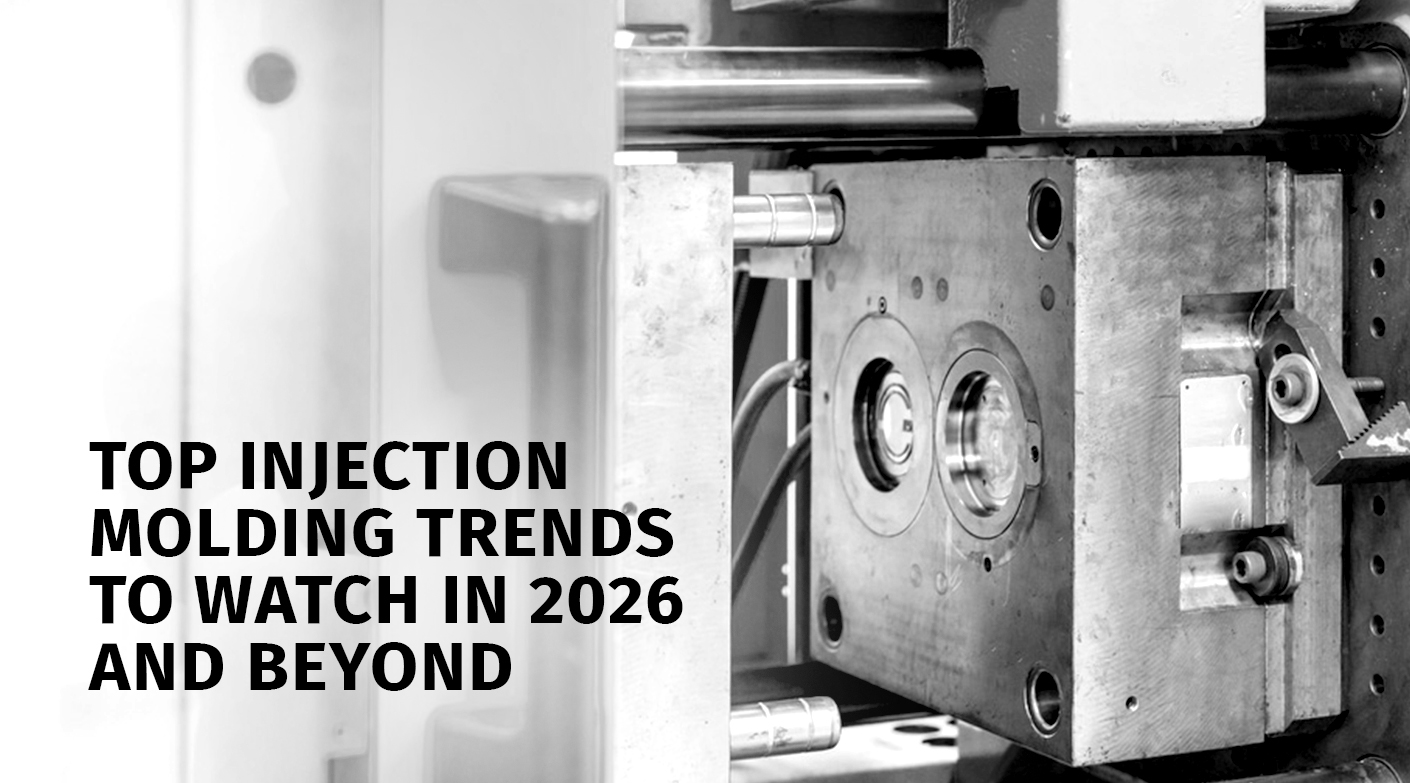
Plastic parts are now moving to a new stage of innovation, from precision medical components to complex automotive interiors. Injection moulding is no longer a simple production process; it is evolving rapidly to become a technologically oriented, insight-driven industry.
As a buyer comparing injection molding materials, a brand that has contracted an injection molding firm, or a designer looking to optimize parts to be produced, the next top trends in injection molding in 2026 and beyond will change what can be made possible. These insights do not merely aim to educate people but also encourage them to make strategic decisions in business and innovators working in the future of plastic manufacturing. Let’s explore the trends.
7 Top Injection Molding Trends in 2026
#1 Smart Manufacturing and IIoT Integration
The combination of the Industrial Internet of Things (IIoT) and smart factory technologies is one of the most radical changes, reshaping plastic injection molding.
Now, what’s actually driving this trend? Well, the trend towards automation and data connectivity is no longer optional anymore, but a necessity. Connected machines and real-time monitoring combined with predictive maintenance enable manufacturers to have never-before levels of precision, productivity, and cost control.
With sensors, machine learning, and advanced analytics, injection molding processes can identify anomalies, predict defects, and adjust parameters in real time.. This not only enhances yield but also significantly reduces downtime.
Manufacturers that adopt IIoT will be able to provide quicker lead times, traceable production data, and enhanced quality assurance, features that are crucial for brands seeking reliable partners. This provides a competitive advantage to injection molding companies. For example, implementing an online dashboard and automatic reporting process provides suppliers with a clear advantage in the quality-driven markets, such as medical, aerospace, and consumer electronics.
#2 Evolution of Advanced Injection Molding Materials
Injection molding is changing the potential of manufacturers. In 2026, high-performance polymers that are heat-resistant and durable, along with chemical stability and lightweight properties, are in high demand.
The materials used in the automotive, medical, and electronic sectors include reinforced thermoplastics, specialty elastomers, and bio-composites.
Such materials enable plastic injection molding manufacturers to fabricate intricate and very accurate parts and achieve high performance and sustainability practices. Selection of the right material has become a strategic decision and not only a cost consideration.
#3 Sustainability-Focused Injection Molding Practices
Plastic sustainability is not a myth but a business need. The 2024 statistics have shown that over 460 million metric tons of plastic were produced, and only a minor fraction of them was recycled.
There is growing usage of recycled resins and bio-based polymers in the industry. Things that needle-moving companies are investing in are:
- Post-consumer recycled (PCR) plastics
- Plant-based bio-resins
- Recycling techniques that recover polymers to virgin quality
Recycled and bio-based materials processes, enabling brands to achieve both performance and sustainability goals, so that a brand can not only meet performance but also sustainability objectives.
Simulation tools and increased accuracy in mold design can now allow manufacturers to reduce scrap and runner waste and make injection molding material utilization more efficient and environmentally friendly.
Cubein is an injection molding company that promotes sustainable production. We achieve this through efficient mold design, minimizing waste materials, and offering low-volume and bridge production options. These practices help brands reduce unsold stock and avoid unnecessary consumption of resources..
#4 Micro and Precision Injection Molding Growth
As the size of the products continues to shrink and become more complex, micro and precision injection molding becomes a major trend. Industries such as medical care, electronics, and automobiles require ultra-small and high-precision parts with zero-defects.
The plastic injection molding companies that have invested in the manufacturing of the micro-molding are more likely to consider next-generation applications of healthcare devices, which include wearable devices, micro-sensors, and medical devices.
#5 Short-Run Injection Molding and Flexible Production
The requirement of customization and more rapid market reaction is transforming the production strategies. The 2026 outlook is that most of the injection molding firms provide short-run manufacturing with flexibility in addition to high-volume production.
The trend has resulted in the brands introducing their products faster, responding to evolving consumer preferences, and reducing excess inventory. Enhanced tooling technologies and digital operations have created a cost-effective solution for low-to-mid-volume injection molding.
Cubein can be used to create detailed and dimensionally accurate molded parts, used for highly demanding applications through precision tooling, careful process control, and design-led manufacturing support.
#6 Integration of Injection Molding and Additive Manufacturing
The other major innovation expected to be a top trend in injection molding by 2026. would be the adoption of additive manufacturing and conventional molding, together. The reason behind this is the fact that 3D printing is an addition to injection molding and not a substitute.
To allow rapid prototyping, create mould inserts, and produce conformal cooling channels, additive manufacturing is being adopted in manufacturing processes and is much faster to develop.
This hybrid design will allow faster design validation, reduced tooling risk, and faster product launches, which can be particularly useful in startups and brands with new products to test in dynamic markets.
#7 Artificial Intelligence and Intelligent Quality Control
Artificial intelligence is emerging as a force in the injection molding processes. The AI systems track past and current production data and identify trends that predict possible defects to prevent them.
The injection molding firms that use AI will be able to automatically set up machine parameters, minimize scrap rates, and hold stricter tolerances in 2026. Predictive quality control will enhance the consistency, reduce the cost of production, and improve the time to market.
As AI application grows within the industry, injection molding firms such as Cubein concentrate on engineering skills, stringent quality control, and product design testing to produce high-quality molded products that are functional and suitable in the industry.
Conclusion
The Top Injection Molding Trends in 2026 is a strong synergy of technology, sustainability, and strategic production. Smart factories, AI, new materials, and hybrid production are not far-fetched speculations, but they are quickly becoming an industrial standard. Progressive organizations will adopt these trends not just to enhance efficiency and quality, but also for competitive edge in the dynamic global economy.
Partnerships will become increasingly important as businesses evolve. Whether it involves using cutting-edge technologies or expertise in proprietary injection molding materials, aligning with the right provider will be crucial. Cubein is a leading injection molding company that integrates sustainability into the core of its operations. They also invest in digital transformation and have set high standards for efficiency and credibility..
| Are you ready to translate the top injection molding trends in 2026 into actionable plans in your next project?
Let Cubein be your trusted partner in this journey. |
FAQs
1. What are the major trends that are defining injection molding in 2026?
The crucial trends include the application of AI in quality control, the incorporation of IIoT, novel and sustainable materials, micro-injection, and a hybrid additive/injection process to advance accuracy and efficiency.
2. Why should there be sustainability in injection molding?
Sustainability minimizes waste, positively impacts the environment, and complies with regulations. Recycling and bio-based materials help brands meet consumer demands for environmentally friendly products.
3. What is the effect of AI on the injection molding industry?
AI enhances predictive maintenance, reduces defects, and optimizes production parameters- resulting in enhanced throughput, quality, and cost-effectiveness.
4. What are the things that the manufacturers should keep in mind when selecting an injection molding partner?
Ensure you find collaborators like Cubein who are well-equipped in the digital world, whose materials are sustainable, and who meet the quality requirements.
Other Blog
SLS 3D Printing in Medical Devices: Benefits and Applic...
SLS 3D Printing in Medical Devices Benefits and Applications
Read More
Low-Volume Manufacturing in 2025: Demand for Customizat...
Do you know what’s the common thread connecting Porsche’s sports car seat, Rolls Royce’s brackets, a
Read More
Post-processing for SLS 3D Printed and MJF Parts
Post-processing for SLS 3D Printed and MJF Parts
Read More


Industrial Product Design Strategies for High-Performan...
Industrial Product Design Strategies for High-Performance Products
Read More

OEM vs ODM Manufacturing: Which is Right For Your Busin...
OEM vs ODM Manufacturing: Which is Right For Your Business
Read More