


ODM (Original Design Manufacturer) for Consumer Electronics
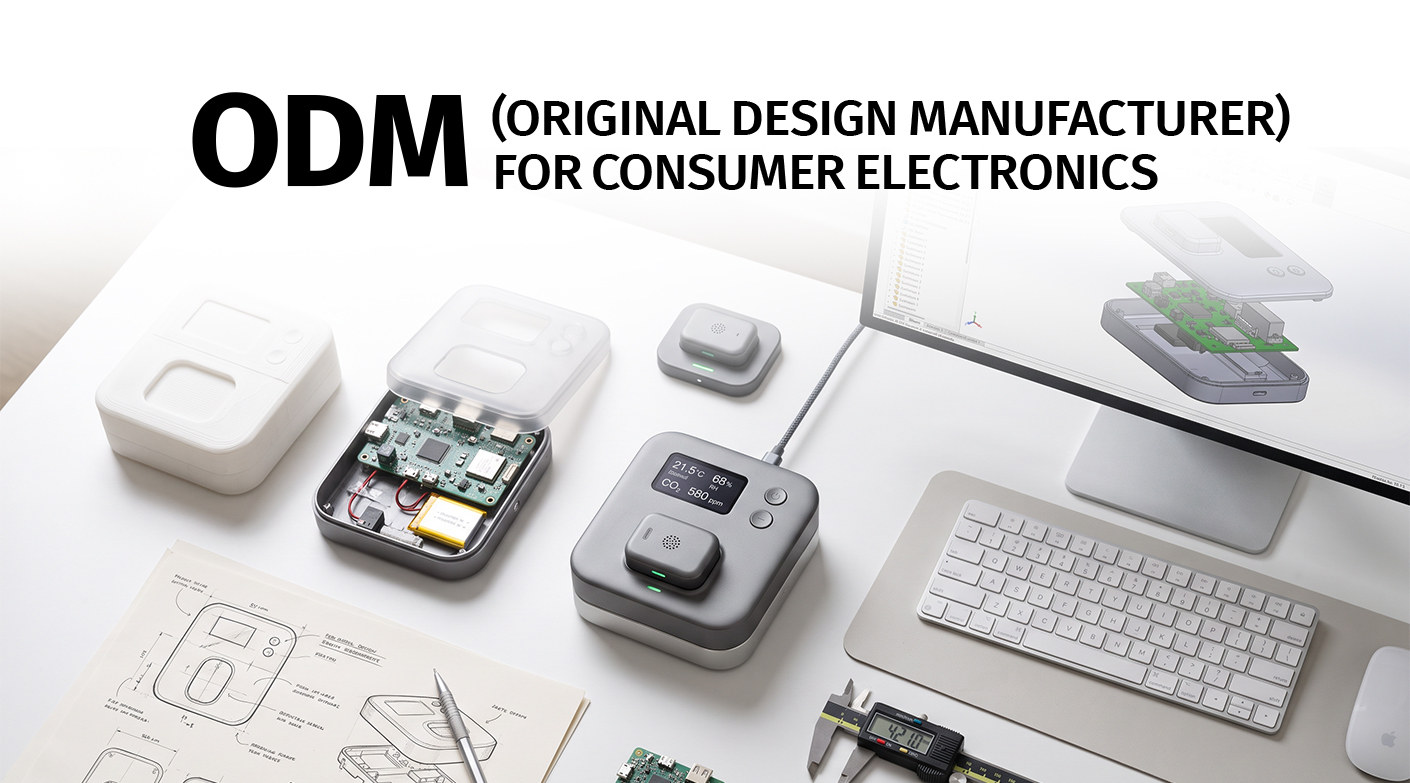
What if you could start a new consumer electronics product without a factory, a big engineering staff, or years of product development? That’s no longer a distant possibility for many companies, whether startups, established brands or tech companies. It is the reality made possible by ODM for consumer electronics.
The consumer electronics market is quite fast-paced. Each year, customers demand smarter features, sleeker designs and quicker product releases. Brands that don’t keep up may lose market share to more agile brands. This is where Original Design Manufacturers (ODMs) can add significant business value.
Rather than building product development capabilities in-house, companies can work with an ODM that will design, prototype, engineer and produce the products to meet market needs. With India becoming a global manufacturing hub, the demand for an Original Design Manufacturer in India is growing.
In this guide, you will learn almost everything about ODM for consumer electronics. Let’s explore.
Understanding Original Design Manufacturer (ODM)
An Original Design Manufacturer (ODM) is a company that designs, develops, prototypes, tests and produces products that are sold under another brand’s name.
An ODM provides technical expertise at every stage of development, unlike traditional manufacturers, who only build the product according to the supplied design. This involves product design, engineering validation, manufacturing process optimization, tooling and production planning.
Typically, ODMs work on consumer electronics products such as:
- Smart home devices
- Wearables
- Consumer IoT products
- Home appliances
- Electronic accessories
- Robotics products
- Connected devices
An ODM is no longer just a production vendor, but an “innovation partner”.
Why are Consumer Electronics Companies Preferring ODMs?
Today, the consumer electronics industry is one of the most competitive worldwide. Products have shorter lifecycles, expectations keep rising, and new technology emerges almost every quarter.
Companies can benefit from working with an ODM in a number of ways:
- Faster prototype validation and market readiness
- Reduced engineering costs
- Lower manufacturing risks
- Access to experienced product designers
- Better manufacturability
- Faster prototype validation for market
- Easier production scaling
Rather than developing these capabilities in-house, businesses can tap into specialised expertise and proven manufacturing processes.
How ODM for Consumer Electronics Works
The process usually starts with a product idea. For many companies, there’s a market opportunity that requires design and manufacturing but they may not have them in-house.
A modern ODM generally goes through these stages:
1. Product Discovery
The first step is to understand the customer’s needs, product goals, technical requirements, and commercial expectations.
The objective is to make sure that the product addresses a real market need prior to development.
2. Industrial Design
Design teams develop the product’s appearance, usability, ergonomics, and functionality while taking manufacturability into account
Good design minimises future design changes and makes the product easier to manufacture and use.
3. Engineering Development
Mechanical engineering, electronic integration, CAD modeling, and design optimisation transform concepts into manufacturable products. Engineering teams also conduct simulations to identify potential issues before production begins.
4. Rapid Prototyping
Functional prototypes help validate product performance, ergonomics, fit, and assembly.
Rapid prototyping helps minimise costly design changes during mass production. This stage can be accelerated with partners that integrate industrial design, rapid prototyping, and planning for manufacturing, all in one place.
5. Manufacturing Preparation
The product is prepared for manufacturing through Design for Manufacturing (DFM), tooling development, production planning, and quality validation.
This stage enables a seamless transition from prototype to production.
6. Production
Once validated, the product moves into production through optimised processes designed to ensure quality and consistency.
ODM VS. OEM: Understanding the Difference
Many businesses confuse ODM VS. OEM, but they have different purposes. Let’s understand their differences.
| Feature | ODM | OEM |
| Product Design | Created by manufacturer | Provided by customer |
| Engineering | Handled by ODM | Customer responsibility |
| Product Development | Complete support | Limited to manufacturing |
| Time to Market | Faster | Usually longer |
| Best For | Startups, innovators, new product launches | Established brands with existing designs |
| Investment | Lower | Higher |
When a company already has completed product drawings and engineering documentation, an OEM manufacturer may be sufficient. But when a business needs support from concept to production, an ODM is typically the best option.
Industries Benefiting from ODM
The range of industries benefiting from ODM services continues to expand as technology becomes increasingly integrated into everyday products.
1. Consumer Electronics
Because of short innovation cycles, ODM capabilities can support the development of smart gadgets, home appliances, entertainment devices and electronic accessories.
2. IoT Devices
The development of connected products needs skills in enclosure design, component integration and manufacturing optimisation.
3. Medical Devices
Medical technology companies frequently require established development partners for precision manufacturing, functional prototypes, and production readiness.
4. Robotics
The robotics industry requires custom parts, mechanical assemblies, rapid iterations, and scalable manufacturing.
5. Automotive Electronics
Integrated product development workflows can support the development of interior electronics, smart controls, testing fixtures and functional assemblies.
The Growing Role of India in ODM Manufacturing
India is rapidly becoming a preferred manufacturing destination for global electronics companies.
Government initiatives supporting the growth of the electronics industry, along with improved infrastructure, a skilled engineering workforce, and competitive production costs, have strengthened India’s manufacturing ecosystem.
Samsung’s FY 2024-25 results revealed that Indian exports of smartphones, television sets, refrigerators, and washing machines increased 25% to about ₹45,930 crore, making India a key global electronics manufacturer. (Source)
This development has further led more companies to partner with Original Design Manufacturers in India for product development and manufacturing.
Common Challenges Businesses Face Without an ODM
The process of getting an electronic product to market is far more complex than many companies realise.
Businesses may face these problems without a skilled ODM partner:
- Frequent design revisions
- Manufacturing defects
- Delayed launches
- Higher tooling costs
- Coordination challenges in the supply chain
- Extended product validation cycles
- Increased engineering expenses
An experienced development partner can identify these risks early, helping businesses avoid the additional costs associated with corrections during production.
Conclusion
Businesses are increasingly turning to ODM for consumer electronics products due to the need for quicker innovation and cost-effective manufacturing. Whether you are launching a smart home device, robotics product, or consumer appliance, partnering with the right development expert can help accelerate your journey from concept to production.
Cubein is an experienced Original Design Manufacturer in India, leveraging industrial design, rapid prototyping, low-volume manufacturing, injection tooling and contract manufacturing. At Cubein, we help businesses bring innovative concepts to life faster and with greater confidence.
| Change your consumer electronics products game with Cubein. |
FAQs
1. What is ODM for consumer electronics?
ODM for consumer electronics is a model where a manufacturer designs, develops, and manufactures products that companies sell under their own brand name.
2. What is the difference between ODM and OEM?
The key difference between ODM and OEM is that an ODM handles both product design and manufacturing, while an OEM manufactures products based on the customer’s existing design.
3. Which industries benefit most from ODM services?
Industries that benefit from ODM services are consumer electronics, IoT, robotics, medical devices, automotive electronics, and smart home products.
4. Why opt for an Original Design Manufacturer in India?
An Original Design Manufacturer (ODM) in India can help businesses launch their products sooner, with a skilled engineering team and cost-effective manufacturing capabilities.
Other Blog
Additive Manufacturing in Military and Defence Industry...
Additive Manufacturing in Military and Defence Industry Applications
Read More
Why Vacuum Casting is the Perfect Fit for Small-Batch P...
Cubein, stands as a reliable vacuum casting service provider, delivering high-quality solutions.
Read More
Why Industrial Design is Essential for Modern Product D...
At Cubein, we can help you bring your innovative product idea into reality.
Read More
Resin 3D Printing vs Filament 3D Printing: Comparison a...
Evaluate the pros and cons of resin 3D Printing vs filament 3D printing technologies.
Read More
Rapid Prototyping for Automotive Industry: An Ideal Sol...
Rapid Prototyping for Automotive Industry An Ideal Solution
Read More
Common Product Design Mistakes and How to Avoid Them
Common Product Design Mistakes and How to Avoid Them
Read More
Best Materials for Fused Deposition Modeling 3D Printin...
Best Materials for Fused Deposition Modeling 3D Printing
Read More
How Automation Improves Efficiency in Injection Molding...
How Automation Improves Efficiency in Injection Molding Services
Read More
OEM vs ODM Manufacturing: Which is Right For Your Busin...
OEM vs ODM Manufacturing: Which is Right For Your Business
Read More